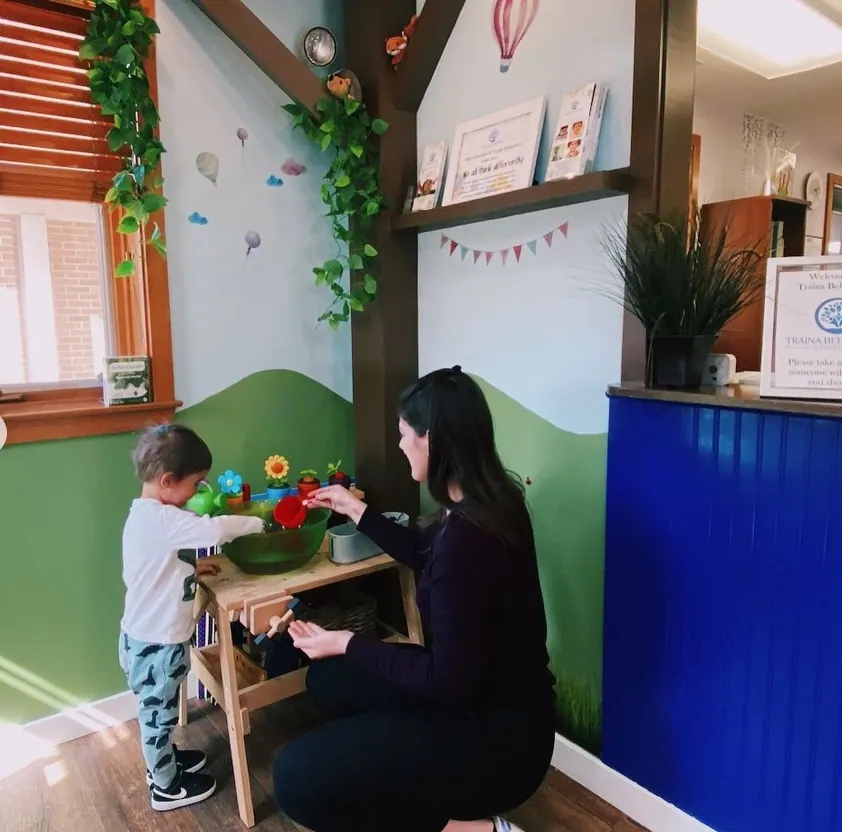
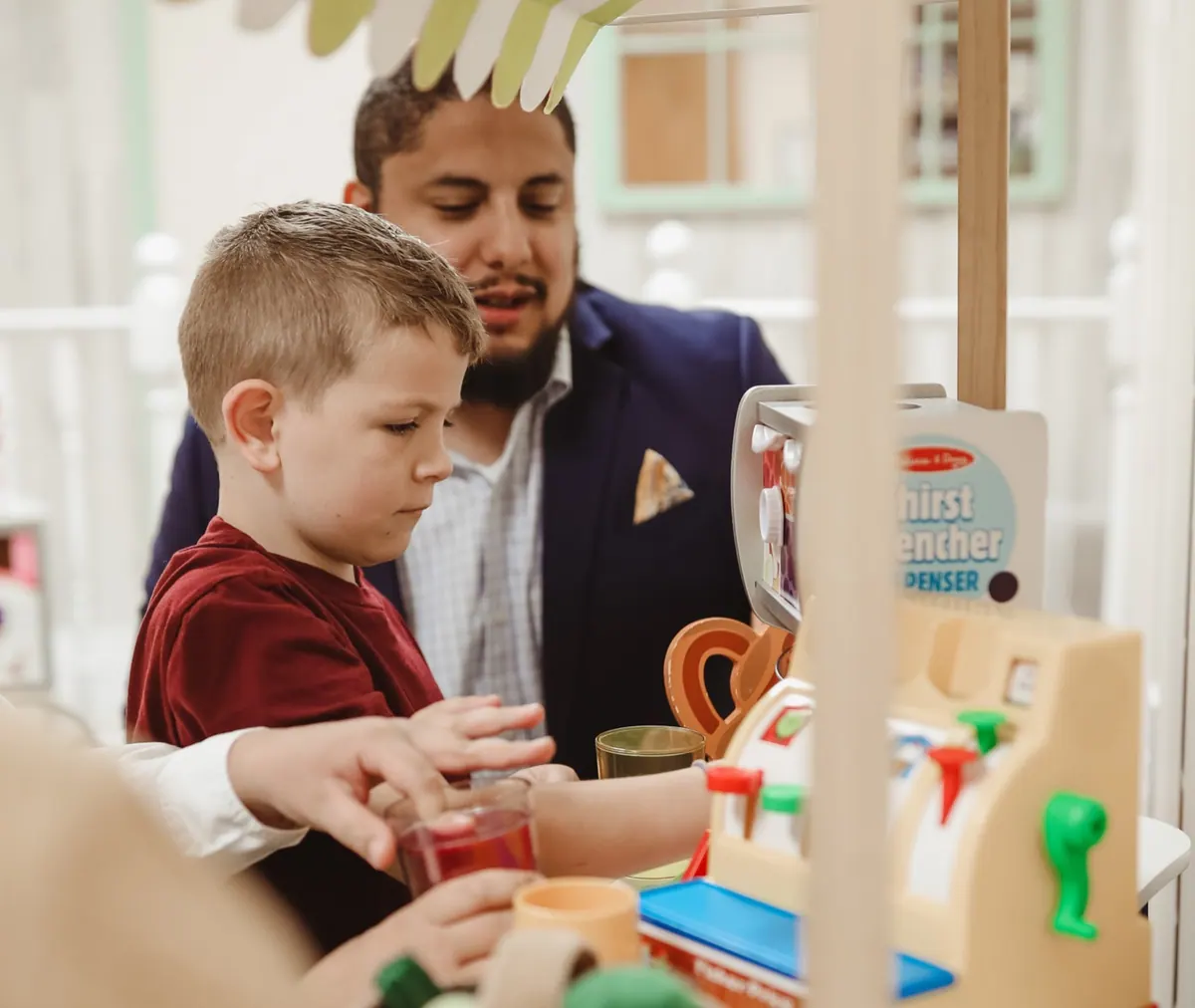
An ABA session takes up a small part of a child's week. Breakfast, school preparation, play, errands, and bedtime happen with parents and other caregivers. Parent training gives families practical support for those everyday moments.
The phrase can sound formal. In many programs, it looks more like coaching: the caregiver and clinician choose a current concern, agree on a manageable strategy, practise it together, and review what happened.
Why caregiver coaching is part of ABA
Children use skills with many people and in many places. A request that works with a therapist at a table may still be difficult during breakfast with a parent or while playing with a sibling. Caregiver coaching helps the team plan for those everyday conditions.
Parents also see parts of the week that clinicians miss. They know which routines run smoothly, which situations create stress, what their child enjoys, and which strategies have already been tried. That information can shape more useful goals.
Research on parent-mediated interventions has reported improvements across several child and caregiver outcomes, including communication and social skills, although effects vary by intervention and study. A 2021 systematic review and meta-analysis examined parent-mediated interventions for autistic children and adolescents. A separate systematic review of parent training found evidence of benefit while also noting differences in intervention type and research quality.
These studies cover several forms of parent-mediated support. They do not mean that every program produces the same result. Families should ask what the provider teaches, how coaching is delivered, and how progress is measured.
What happens during a coaching session?
A session should connect with a specific family goal. The clinician may begin by reviewing a recent routine, looking at available data, or watching a short interaction. The family and clinician then agree on the skill to practise.
- Explain. The clinician describes the strategy in plain language and links it to the child's goal. The explanation should tell the caregiver what to do, when to do it, and what response to watch for.
- Demonstrate. The clinician models the strategy with the child, through role-play, or with a short example. The caregiver can see the timing and wording in context.
- Practise. The caregiver tries the strategy during a real or rehearsed routine. Practice keeps the session grounded in action.
- Give feedback. The clinician identifies what worked and offers a specific adjustment. Feedback should feel usable and respectful.
- Plan for the week. The family chooses when the strategy will be used before the next session. A narrow plan, such as practising during one snack each day, can be easier to sustain than a broad instruction to use it constantly.
This teaching sequence resembles behavioral skills training, which uses instruction, modelling, rehearsal, and feedback. The clinician may adapt the format based on the caregiver's experience, language, learning preference, and available time.
What parent training can cover
The content depends on the child and family. Common topics include functional communication, transitions, play, self-care, sleep routines, mealtimes, safety, and ways to respond to a defined behavior.
One family might work on helping a child request a break before leaving the table. Another might build a visual morning routine. A third may practise offering choices during play so the child has more opportunities to communicate a preference.
The goal needs a clear connection to daily life. Families should understand how the strategy supports the child and how the team will decide whether it helps.
Parent training should fit the household
A strategy has to work in the family's actual environment. Parents may have jobs, several children, shared caregiving arrangements, limited space, or cultural routines that affect implementation. Good coaching accounts for those facts from the start.
The family can tell the clinician when a recommendation feels too complex or intrusive. That feedback helps the team simplify materials, choose a different time of day, or reduce the number of steps.
Coaching also needs room for the caregiver's priorities. A clinician may see several possible goals during an assessment. The family's most urgent concern may be leaving the house safely, getting through a necessary medical routine, or helping siblings play together with less conflict.
Does parent training mean doing therapy all day?
No. Families need ordinary time together without collecting data or arranging teaching trials. Coaching usually focuses on selected routines where a small change could make a practical difference.
Parents also keep their role as parents. The clinical team remains responsible for assessment, treatment design, supervision, and review. Caregiver participation adds information and practice; it does not transfer professional responsibility to the family.
How caregiver involvement helps skills carry over
Generalization occurs when a person uses a skill with new people, materials, or settings. It often needs to be intentionally planned and supported. The treatment team plans and tests it.
Caregivers can help by using the same communication response during a familiar routine, giving the child chances to use a skill outside a therapy session, and reporting what happens. The clinician can then adjust prompts, materials, or expectations.
Research on parent-implemented functional communication training found reductions in challenging behavior across the studies reviewed, with some evidence that improvements carried to new settings and people. The systematic review is indexed in PubMed. Those interventions involved defined procedures and training, so the finding should not be reduced to "parents can fix behavior at home."
How progress can be measured
The measurement should match the goal. A family working on communication might track how often the child independently requests help during a routine. A transition goal could measure the level of prompting needed or the time taken to move between activities.
Caregiver progress can also be measured. The clinician may record whether each step of a strategy is used accurately, then provide more practice where needed. This is feedback on the teaching plan, not a grade on the parent.
Data collection should stay proportionate. A quick tally, short rating, or occasional video reviewed with consent may provide enough information. Long forms completed several times a day can become a burden and reduce participation.
Questions parents can ask their BCBA
- Which child and family goal will this strategy address?
- What will the strategy look like during our actual routine?
- Can you demonstrate it before I try?
- How often should we practise this week?
- What should I record, and how will the data be used?
- What can I do when the strategy is hard to use?
- When will we review whether it is helping?
- Who else can take part in coaching?
Involving siblings and other caregivers
Children may spend time with grandparents, babysitters, separated parents, extended family, or childcare staff. With appropriate consent, some of these people can learn a simple, consistent response that supports the child's plan.
Each person does not need the same level of training. A grandparent who provides care once a week may need a short visual routine and practice with one communication strategy. A parent managing daily sessions may need more detailed coaching and regular feedback.
Siblings require special care. They can join selected play or communication activities when this is appropriate, but they should not carry responsibility for treatment or behavior management.
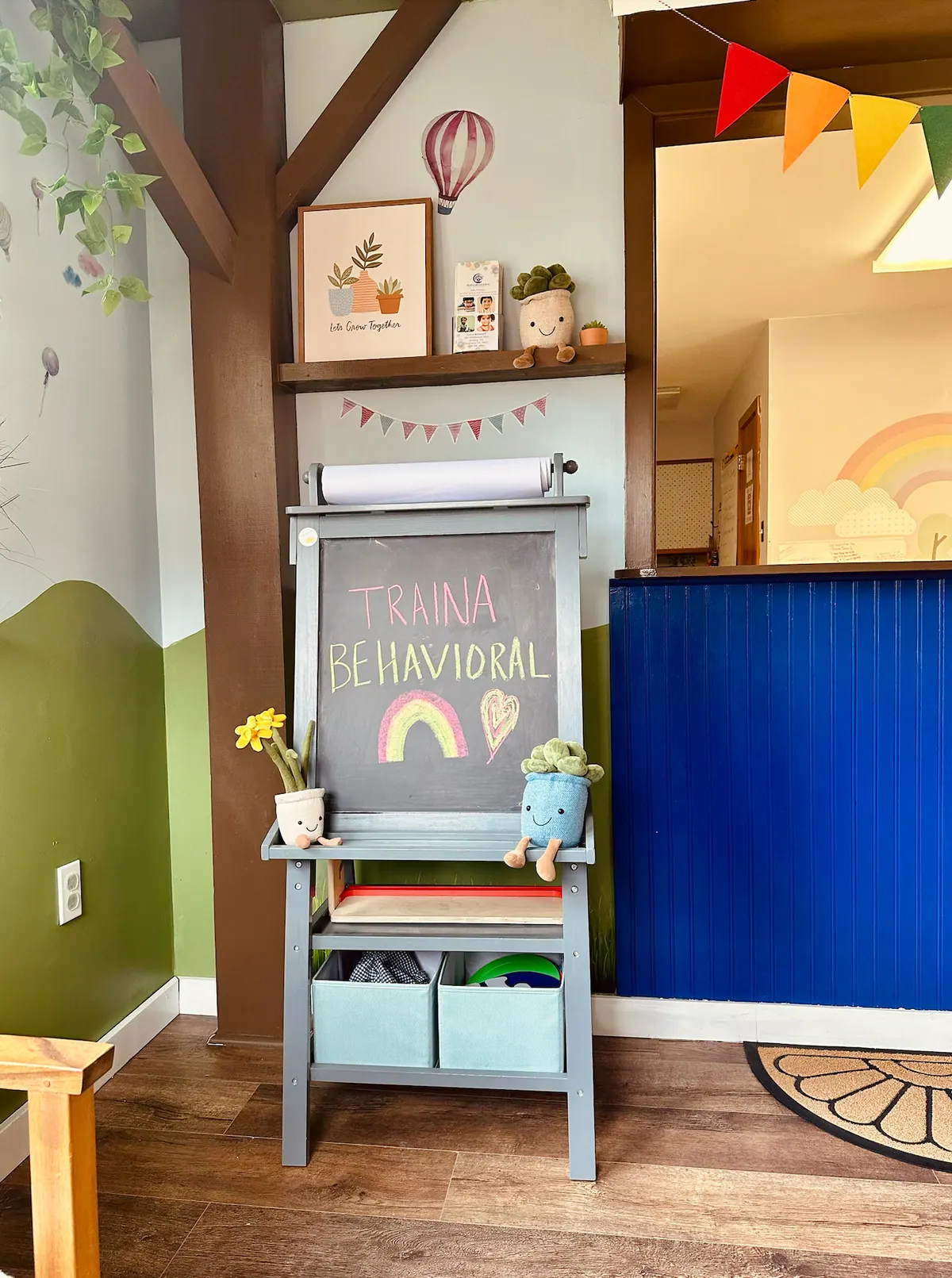
Parent training at Traina Behavioral
Traina Behavioral describes its approach as family-centered. The team begins by learning about the family's goals, values, and lifestyle, then develops individualized programs around the learner's strengths and needs.
Caregiver coaching should fit real life. We focus on a few strategies the whole family can use in daily routines, not a second full-time therapy job at home.
Allison Traina, M.S., BCBA, BCC, LBS, LBA
If you want to discuss how coaching could fit your treatment plan, contact Traina Behavioral. You may also find What Is a Functional Behavior Assessment? A Parent's Guide useful when behavior goals are part of the conversation.
Sources
- Deb, S. S., Retzer, A., Roy, M., Acharya, R., Limbu, B., & Roy, A. (2020). The effectiveness of parent training for children with autism spectrum disorder: a systematic review and meta-analyses. BMC Psychiatry, 20, 583.
- Conrad, C. E., Rimestad, M. L., Rohde, J. F., and colleagues. (2021). Parent-mediated interventions for children and adolescents with autism spectrum disorders: a systematic review and meta-analysis. Frontiers in Psychiatry, 12, 773604.
- Gerow, S., Hagan-Burke, S., Rispoli, M., Gregori, E., Mason, R., & Ninci, J. (2018). A systematic review of parent-implemented functional communication training for children with ASD. Behavior Modification, 42, 335–363.
- Lindgren, S., Wacker, D., Suess, A., and colleagues. (2016). Telehealth and autism: treating challenging behavior at lower cost. Pediatrics, 137, S167–S175.