A parent may notice that a toddler uses few gestures, struggles to communicate a need, loses a skill, or develops differently from other children of the same age. Those observations are enough to start a conversation with the child's doctor and request an early intervention evaluation.
Families do not need to identify the cause on their own. Early intervention programs evaluate a child's development, explain eligibility, and help families understand the services available in their state.
What early intervention means
The Centers for Disease Control and Prevention defines early intervention as services and supports for babies and young children with developmental delays and disabilities and their families. Services depend on the child's evaluation and may include speech, physical, and other therapies.
The phrase describes a broad service system. It does not name one therapy. A child's plan may involve developmental instruction, speech-language therapy, occupational therapy, physical therapy, behavioral treatment, family coaching, or a combination selected for that child.
State Early Intervention programs operate under age and eligibility rules. Private insurance, Medicaid, and individual providers follow their own clinical and administrative processes. Understanding which system is handling each service makes the first months easier to navigate.
When to ask for an evaluation
Parents can raise a concern whenever a child's development worries them. Useful observations include the skills the child uses, the situations that are difficult, any skills that have been lost, and changes noticed by other caregivers.
The CDC recommends autism-specific screening during well-child visits at 18 and 24 months. Screening identifies children who need a closer evaluation. It does not provide a diagnosis by itself. Developmental screening is also recommended at 9, 18, and 30 months, separate from autism-specific screening at 18 and 24 months. The CDC's autism screening guidance also explains the role of developmental monitoring and screening.
Contact the child's healthcare professional promptly after a loss of previously used language, social, or movement skills. A clinician can assess possible medical causes and make appropriate referrals.
What happens after a referral?
- Referral and intake. A parent, doctor, or other professional contacts the state or local program. The intake team gathers basic information and explains the next steps.
- Developmental evaluation. Qualified professionals assess relevant developmental areas. Parents contribute information about the child's routines, strengths, communication, and concerns.
- Eligibility decision. The program compares the evaluation results with state criteria. The family receives an explanation of the decision and information about its rights.
- Individual plan. Birth-to-three Early Intervention services use an Individualized Family Service Plan (IFSP). After age three, eligible preschool special education/Early Intervention services use an Individualized Education Program (IEP). The document records goals, services, and how progress will be reviewed.
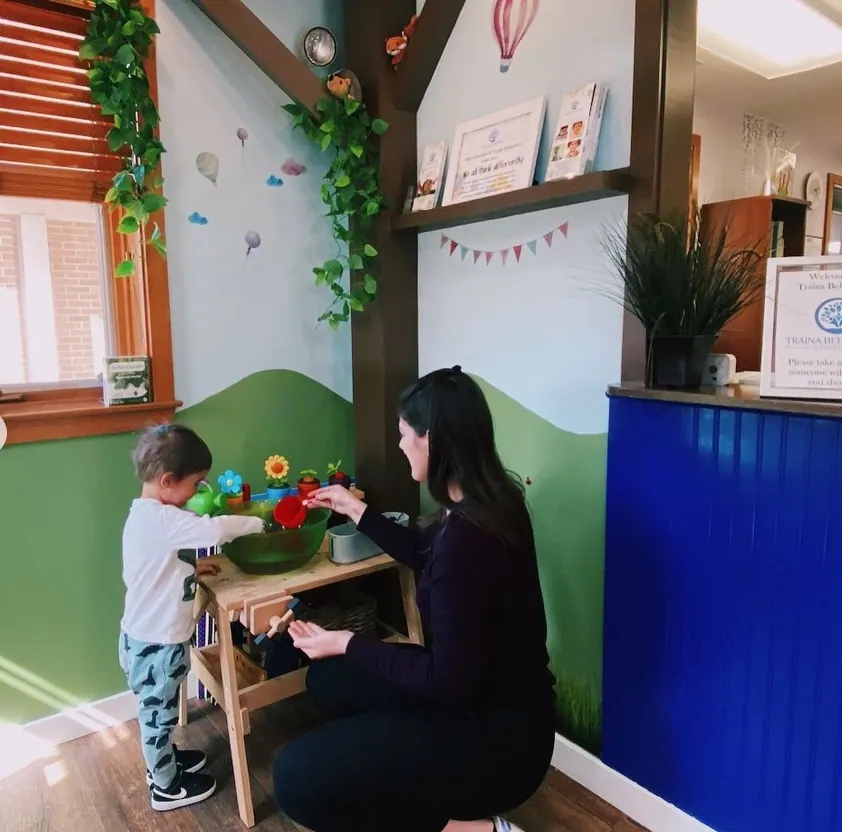
- Services in familiar routines. Early intervention often takes place in homes, childcare programs, and other settings the child knows. Providers coach caregivers and build learning opportunities into ordinary activities.
Early intervention in Pennsylvania
Pennsylvania's Early Intervention system serves eligible children from birth through age five. Infant/Toddler Early Intervention serves children from birth to age three and is administered through the Department of Human Services. At age three, eligible children may transition to Preschool Early Intervention, which serves children ages three through five and is administered through the Department of Education.
The state's Early Intervention overview explains that services can occur at home, in childcare, in a nursery school, in a play group, or in another familiar setting. Supports are built into typical routines so the child has frequent opportunities to practise.
Families can make a referral for Pennsylvania Early Intervention without a fee. The state also provides the CONNECT Helpline at 1-800-692-7288 for families of children from birth to five.
For families in Bucks County, Pennsylvania's referral service directs you to the appropriate county or preschool program. Bring any developmental screening, medical, childcare, or therapy records that could help the evaluation team understand the child.
Early intervention in New Jersey
The New Jersey Early Intervention System serves eligible infants and toddlers from birth until their third birthday. Families can contact the system when they have a developmental concern; a confirmed autism diagnosis is not required to make the initial call.
The New Jersey Department of Health provides program information and directs families to the statewide referral number, 1-888-653-4463. Its guide for families with developmental concerns explains the referral route and the age range served.
After age three, eligible children may receive preschool special education services through their local public school district. The early intervention service coordinator should discuss transition planning with the family before the child's third birthday.
Where ABA therapy fits
Applied behavior analysis uses observation and data to teach useful skills and understand behavior. Early ABA goals may address functional communication, play, following everyday routines, self-care, and skills that help a child participate at home or in the community.
ABA is one possible part of an early support plan. The CDC's overview of autism treatments describes behavioral, developmental, educational, social-relational, pharmacological, and psychological approaches. A child's combination of services should reflect an individual assessment and the family's priorities.
The intensity and format of ABA vary. Some children receive focused treatment for a small number of goals. Others receive a broader program covering several developmental areas. The Council of Autism Service Providers publishes practice guidelines covering assessment, treatment planning, and service delivery.
Choosing useful early goals
Goals should connect with the child's life. A broad phrase such as "improve communication" becomes more useful when the team identifies what the child needs to communicate, the form that communication can take, and the settings in which it will be used.
For one child, an early goal may involve asking for help with a gesture, picture, device, or spoken word. Another may work on joining a short play routine, tolerating a necessary care task, or moving between two familiar activities with support.
Parents can ask how each proposed goal improves the child's participation, safety, comfort, or independence. They can also ask how interests and preferred activities will be used during teaching.
Questions to ask an early intervention or ABA provider
- What did the assessment identify as strengths and current needs?
- Which goals will you address first, and why?
- How will my child communicate a preference, refusal, or request for a break?
- What will sessions look like during play and daily routines?
- How will caregivers be involved?
- How will you coordinate with speech, occupational therapy, childcare, or preschool teams?
- Which data will you collect, and how often will we review progress?
- What happens when a goal or teaching approach is not helping?
The answers should be specific to the child. Parents should receive enough information to understand the plan and give informed consent.
Supporting progress between appointments
Children get many learning opportunities during ordinary family life. A provider may show caregivers how to pause during a familiar song so the child can signal "go," offer two acceptable choices at snack time, or use a picture during a routine.
The strategy should fit naturally into the day. Families need time for play, rest, siblings, and activities that carry no teaching demand. A manageable plan is more likely to be used consistently.
Next steps with Traina Behavioral
If you want to talk through assessment options, service availability, or documents needed for intake, contact Traina Behavioral. Families who are still sorting priorities can also start with Recently diagnosed? Start here or Is ABA right for my child?
Sources
- Centers for Disease Control and Prevention. Early Intervention.
- Centers for Disease Control and Prevention. Accessing services for autism spectrum disorder.
- Centers for Disease Control and Prevention. Clinical screening for autism spectrum disorder.
- Pennsylvania Department of Education. Early Intervention.
- Pennsylvania Department of Human Services. Make a referral for Early Intervention services.
- New Jersey Department of Health. New Jersey Early Intervention System.
- New Jersey Department of Health. System of payment and family cost participation.
- Council of Autism Service Providers. ABA practice guidelines.